Saudi National Day 96: A Resilient Nation, a Strong Economy, and Media Keeping Pace with the Future
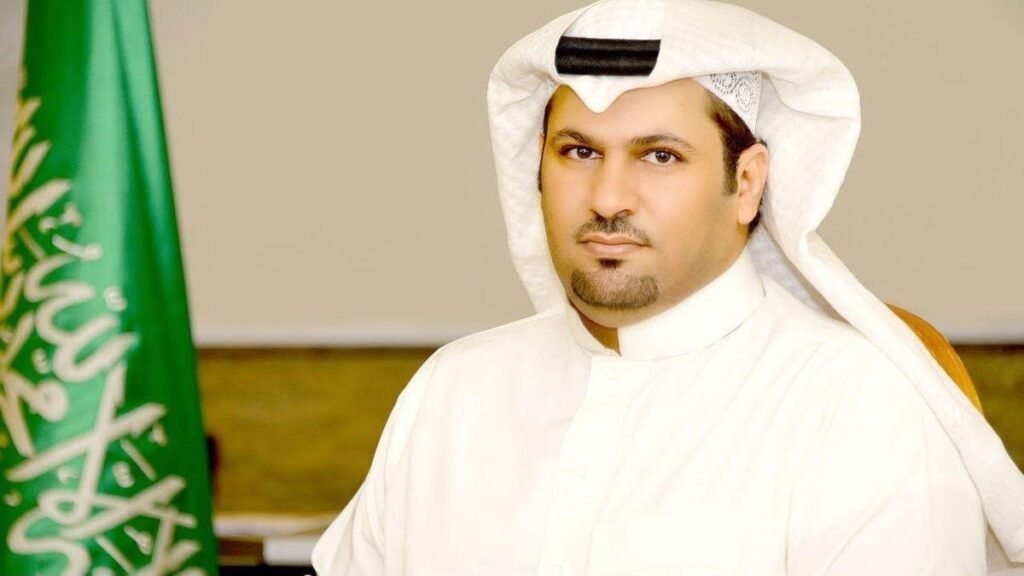
From National Unity to Economic Strength… Saudi Arabia Moves Steadily Toward a More Competitive and Influential Future
By Media Writer / Mofleh Al-Haftah
Saudi Arabia celebrates its 96th National Day this year at a new milestone in its modern history, reflecting on a journey that began with the unification of the Kingdom in 1932 under the leadership of the Founder, King Abdulaziz bin Abdulrahman Al Saud, may he rest in peace.
Over the decades, the Kingdom has undergone extensive nation-building and development, reaching a stage where it has become a prominent economic, regional, and international player across multiple fields, drawing strength from its strategic geographical position, economic weight, Arab and Islamic standing, and its distinguished role in serving the Two Holy Mosques.
The 96th National Day carries a meaning that goes beyond celebrating a national occasion. It provides an opportunity to reflect on the journey of a nation that moved from the founding of the state to the establishment of its institutions, then to comprehensive development, and ultimately to the economic, social, and technological transformation taking place today under Saudi Vision 2030.
Under the leadership of the Custodian of the Two Holy Mosques, King Salman bin Abdulaziz Al Saud, and His Royal Highness Crown Prince and Prime Minister Mohammed bin Salman bin Abdulaziz, Saudi Arabia continues to implement wide-ranging programs and projects aimed at diversifying the national economy, strengthening the role of the private sector, enhancing quality of life, investing in Saudi talent, and developing infrastructure, services, and emerging sectors.
One of the most prominent features of Saudi Arabia’s transformation in recent years is that the national economy is no longer viewed solely through the lens of oil as the primary source of growth. Instead, the Kingdom is building a more diversified economic base encompassing industry, mining, tourism, logistics, technology, entertainment, culture, sports, renewable energy, and other promising sectors.
The year 2026 is not an ordinary year in the journey of Saudi Vision 2030. It marks the beginning of its third and final phase, extending toward 2030 and focusing on maximizing results, accelerating implementation, and ensuring the sustainability of the transformation’s impact.
Here, investment in Saudi people assumes particular importance, as they are the fundamental pillar of any economic or social transformation. The Kingdom is not investing solely in cities, projects, and infrastructure; it is also investing in young men and women, education, training, innovation, research and development, and the development of national capabilities.
Alongside the economic transformation, Saudi media is also experiencing an advanced phase of development amid the digital transformation, the rapid expansion of new platforms, and the changing nature of the content industry.
Saudi media is no longer confined to newspapers and traditional television channels. It has expanded into digital platforms, podcasts, visual and documentary production, specialized content, and artificial intelligence, alongside efforts to develop technological infrastructure, improve media content, and support a more sustainable media industry.
Media has itself become part of the broader development landscape. Content creation increasingly intersects with tourism, culture, sports, entertainment, the economy, and investment, contributing to a broader representation of Saudi Arabia, its projects, its society, and its ongoing transformation.
Therefore, the strength of Saudi media should not be measured solely by the number of platforms or the scale of coverage. Its real significance lies in its ability to produce professional content capable of explaining national transformations, highlighting success stories, and presenting Saudi Arabia to local, Arab, and international audiences through modern and professional communication.
These transformations are taking place at a time when the Middle East is witnessing rapidly evolving political, economic, and security developments. This makes economic and institutional stability an important factor in enabling countries to continue implementing their development programs.
Modern Saudi development has, since the era of King Abdulaziz, been closely associated with building a modern state capable of managing a vast territory and providing services to its citizens and visitors. This journey has continued through major projects aimed at developing the systems and services related to Hajj and Umrah, transportation, housing, and digital services.
Saudi Arabia is not merely an economy, a collection of major projects, or a group of modern cities. It is a society with a deep history, a strong connection to its homeland, rich and diverse heritage, and an ability to adapt to rapidly changing circumstances.
From Riyadh to Makkah, Madinah, Jeddah, Dammam, Asir, Tabuk, Qassim, Hail, Jazan, Najran, and all other regions of the Kingdom, a diverse national landscape is taking shape—one that brings together geographical and cultural diversity under a unified national identity.
With every new stage of development, greater emphasis is placed on Saudi men and women as partners in nation-building, rather than merely beneficiaries of its outcomes.
The current Saudi landscape demonstrates that the challenge is no longer the establishment of the state, but rather preserving its achievements, developing them further, strengthening the Kingdom’s ability to compete globally, transforming opportunities into sustainable projects, and turning ambition into tangible results.
The Kingdom’s strength today cannot be attributed to a single factor. Rather, it is the result of the interaction of a strategic location, a large and diversified economy, natural resources, national institutions, advanced infrastructure, major investment projects, a young population, global religious significance, and an expanding presence in the fields of economy, culture, sports, tourism, technology, and media.
Saudi Arabia enters its 96th year carrying a remarkable historical legacy, an established religious standing, a substantial economy, an ambitious long-term development vision, and a society actively participating in shaping its transformation.
Therefore, celebrating National Day is not merely an occasion to remember history. It is also an opportunity to understand the present and envision the future.
A nation founded on unity, strengthened through development, and driven today by knowledge, innovation, investment, and its people continues to build its future with confidence and determination.